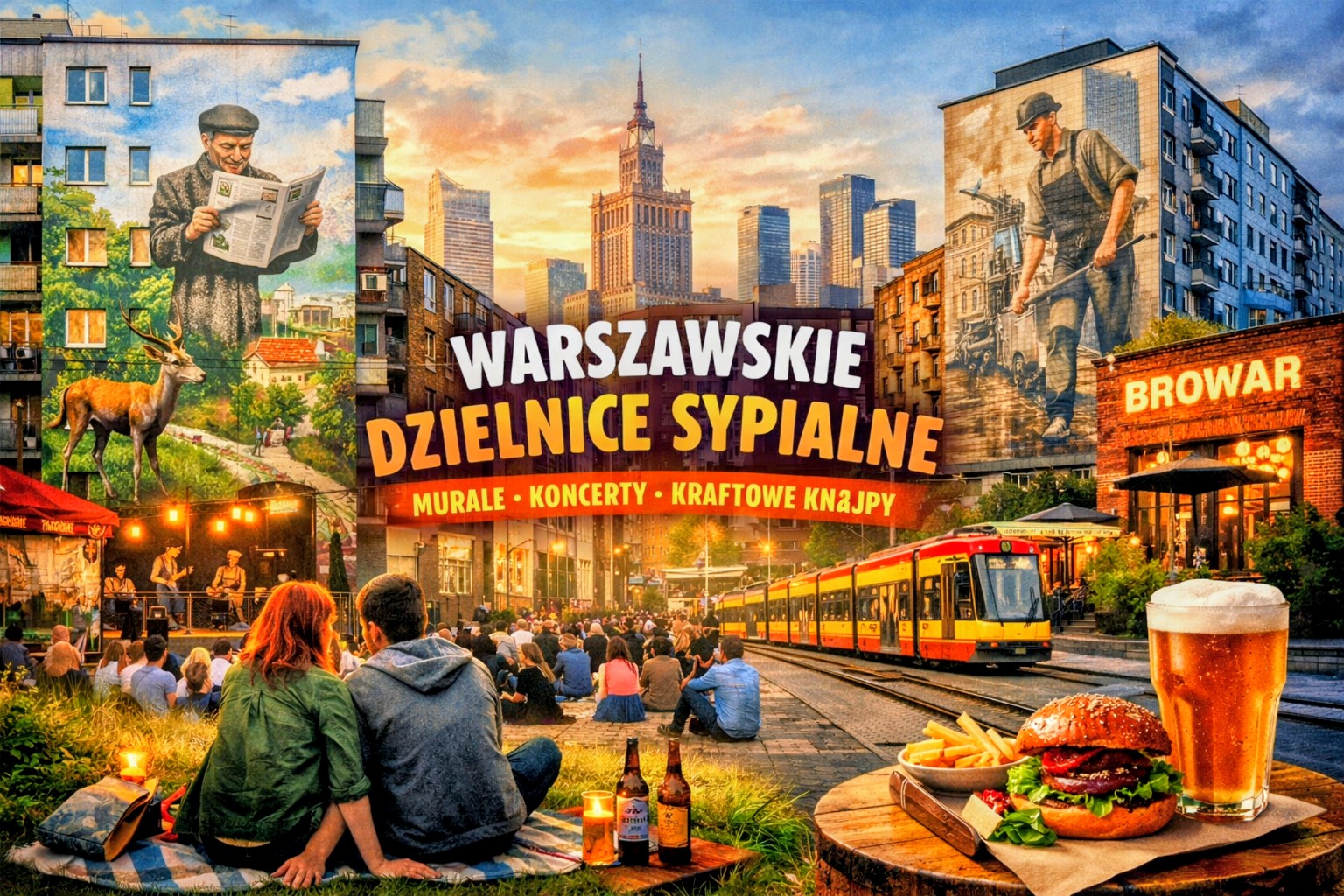
Ursynów, Praga-Północ, Wola, Mokotów… Sound boring? Think again. This is where the real, unfiltered life of Poland’s capital happens.
Most tourists stick to the Royal Route and the view from the 30th floor of the Palace of Culture. Then they say: “Warsaw? Flat, rebuilt, kind of boring.”
If only they traveled 3–4 metro stops further… They’d see a city full of colorful murals, courtyard concerts, and spots where craft beer flows freely and prices won’t break the bank.
📌 If you want to explore more authentic nightlife experiences across Poland, check out our guide to Nightlife in Poland: Where to Feel the City Vibe After Sunset – it will show you where to experience real urban life all over the country.
Here’s a guide to Warsaw’s bedroom districts that will change your mind about the capital.
1. Ursynów: Concrete, Art & Courtyard Stages
Ursynów. For many – a synonym of 1980s block housing. For the initiated – the largest open-air mural gallery and a hub of independent culture.
What to see?
Murals on buildings at Laskowa Street – multi-story paintings by world-class artists (including Poland’s answer to Banksy – Nawer). One of them depicts… Ursynów as a garden city.
Concerts in the courtyard at 7 Wokalna Street – yes, you read that right. The local initiative “Podwórko na Wokalnej” organizes free jam sessions and concerts right between the staircases in summer. Grab a blanket, a beer from the nearest Żabka, and sit down.
Where to eat and drink craft beer?
Browar Ursynów – the only brewpub in this part of the city. They brew Ursyniackie APA and caramel Bursztyn. Plus wood-fired pizza and crowds of locals.
Pierogarnia “Na Północ” (don’t mind the name – it’s in Ursynów) – dumplings with beef and cranberries. No cheating – they’re hand-made.
Getting there: Metro to Ursynów or Służew.
2. Praga-Północ (North Praga): Not as Scary as They Paint It
Praga had a bad reputation for years. Today it’s the most authentic district of Warsaw, where cracked sidewalks meet trendy spots, and gates hide courtyards straight out of a soap opera.
What to see?
Murals on Ząbkowska Street – a symbolic street. Huge portraits of locals (e.g., “Grandpa with a newspaper”) and abstractions.
Courtyard at 17 Brzeska Street – step through the gate. Inside: open-air concerts, food trucks, and live Warsaw hip-hop. In summer, Ras Luta, Ten Typ Mes and local discoveries perform.
Różycki Bazaar – the only pre-war bazaar that survived the war. You can buy everything: from antiques to homemade wine from bushes.
Where to eat?
Kraftownia Praga – 12 taps of Polish craft beer. Plus beef zapiekanki and a board game corner.
Czeska Budka – a tiny shack serving Czech cuisine. Goulash in bread, fried cheese, and kofola. A true cult favorite among locals.
Getting there: Tram or walk from Dworzec Wileński.
3. Wola (Młynów Area): The New Heart of Warsaw’s Craft Scene
Wola is associated with skyscrapers. But the Młynów district (Prosta and Wronia streets) is today Warsaw’s craft capital. No wonder it’s called “Poland’s Brooklyn”.
What to see?
Murals “Wola” at 23 Wronia Street – one of the largest in Europe (30 meters high). Depicts the history of working-class Wola.
Concerts at the Norblin Factory courtyard – although Norblin is close to the center, its vibe belongs to “New Wola”. In summer, the courtyard turns into a concert venue (jazz to electronic).
Where to eat and drink?
Browar Wola (Warsaw Brewery) – a massive brewery in an old hospital. 10 house beers – from light lager to imperial stout. Restaurant serving Polish cuisine on trays – the art of deconstruction.
Jadłospis Kraftowy – a food hall at Wolska Street. Here you’ll find: ciders, sour beers, wild game burgers, craft ice cream. And on the wall – a giraffe painted by M-City.
Getting there: Tram or metro (Rondo Daszyńskiego).
4. Mokotów (Lower, near Wilanowska Metro): Green Courtyards & Home Cooking
Lower Mokotów has more greenery than people think. Between the blocks stretch parks, squares, and courtyards where street musicians play in summer.
What to see?
Morskie Oko Park – ponds, willows, and squirrels. At the back of the park, near 113 Puławska Street, Sunday shanty concerts take place – locals bring deck chairs.
Murals “Mokotów wspomina” (Mokotów Remembers) – 95 Racławicka Street. Dedicated to the Warsaw Uprising. 15 meters high – impressive.
Where to eat?
Bistro “Pod Papugami” – hidden in a courtyard on Dąbrowskiego Street. Homemade Polish pork chop, pyzy with meat, and… craft mead drink (yes, drink!).
Cider & apples – no single venue, but every Friday at the market near Obrzeżna Street, Mr. Wiesław stands with his artisanal cider (“Szara Reneta”). A bottle for 25 zł.
Getting there: Metro Wilanowska, then walk.
If you’re curious about more unique cities and authentic experiences across Poland, also check out our guide to the Best Party Cities in Poland 2026: Ranking, Prices & Nightlife Guide – a great starting point for planning your discovery tours throughout the country.
5. Why All This Matters (and Why Google Will Love It)
Avoid the crowds – no queues for the toilet in Ursynów.
Spend less – beer in the center: 18–22 PLN. In Praga: 10–14 PLN.
Feel the real Warsaw – not the one from guidebooks, but the one from courtyards, blocks, and neighborhood shops.
Take better photos – the mural in Wola is bigger and more interesting than anything in Śródmieście.
6. One-Day Itinerary: An Ideal Day Outside the Center
10:00 – Coffee & mural – Ursynów, Laskowa Street
12:00 – Walk & courtyard concert – Praga, Brzeska 17
14:00 – Lunch + craft beer – Kraftownia Praga
16:00 – Wola mural – 23 Wronia Street
18:00 – Wola Brewery – Warsaw Brewery
20:00 – Mr. Wiesław’s cider – Mokotów, Obrzeżna market (Friday)
Conclusion: Is It Worth It?
Yes. Even if you only have one day in Warsaw. Spend an hour on travel – and you’ll see a city that no brochure will show you. Housing estates full of art. Courtyards that sing. And craft beer that won’t ruin your wallet.
And for dessert, a little test: when you get home, try to find a mural on your own block of flats. Maybe it’s worth a photo too.