
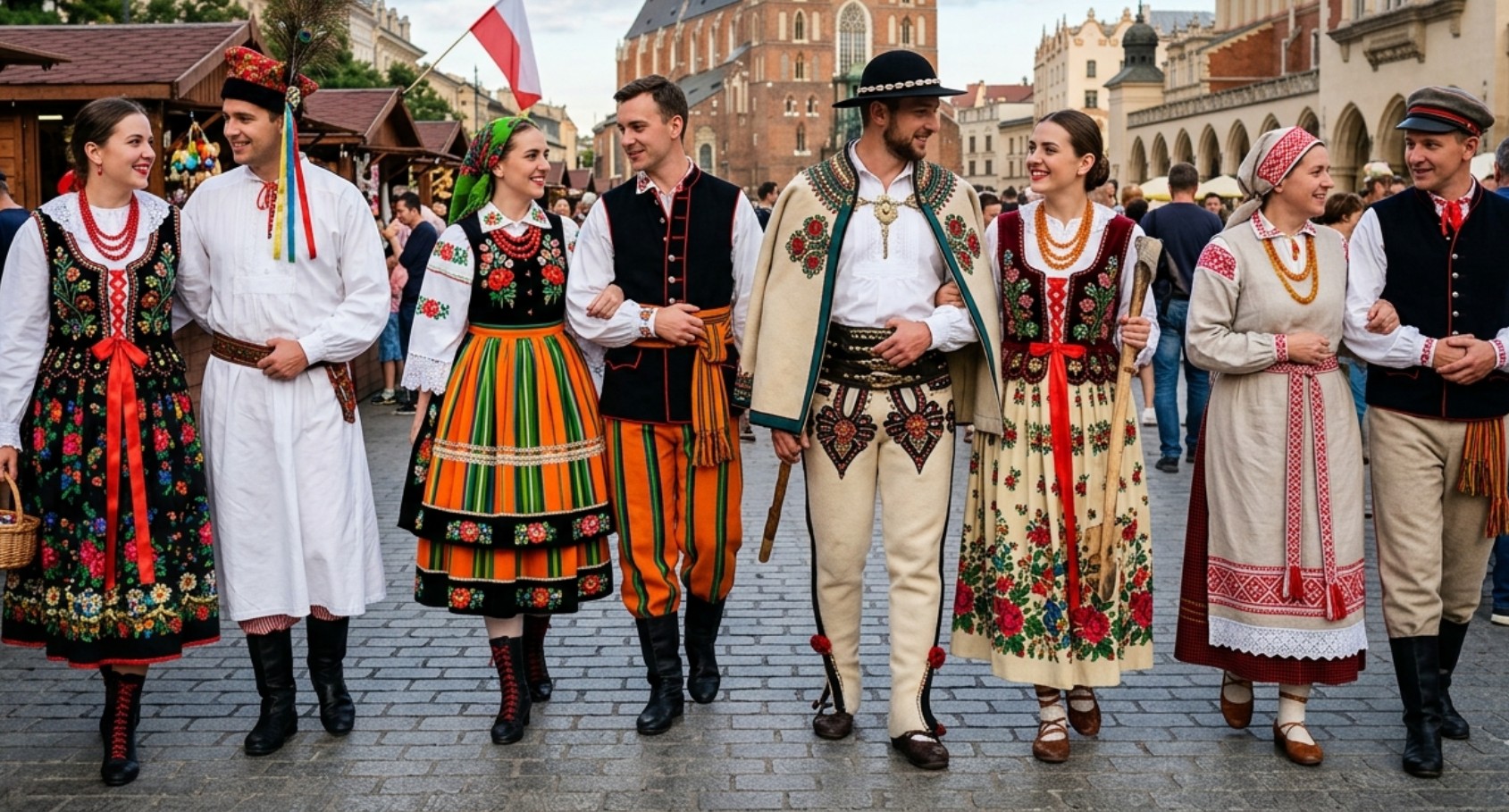
Poland, a country with a rich history and cultural diversity, also boasts an extraordinary heritage in the field of attire. Traditional Polish folk costumes are not just pieces of fabric, but a reflection of regional identity, history, social status, and artistic taste. From picturesque mountain areas to lowland villages, each region has developed its own unique patterns, colors, and styles, which have evolved from everyday wear into cultural symbols that we admire to this day.
History and Evolution of Polish Folk Costumes
In the past, folk costume was the everyday attire for most of society, especially in rural areas. Its form and embellishments were closely linked to climatic conditions, material availability, and local traditions. Over the centuries, especially from the 19th century when urban clothing became more standardized, folk attire gained particular significance as an expression of distinctiveness and national consciousness, particularly during the partitions of Poland. As industrialization changed lifestyles, folk costumes began to be worn mainly for special occasions, holidays, and celebrations.
Regional Diversity: Gems of Polish Attire
The diversity of folk costumes in Poland is immense. Here are a few examples from the most recognizable regions:
Kraków costume: One of the most famous and highly regarded, characterized by rich embroidery, red bodices for women, often adorned with sequins and beads, and floral skirts. Men typically wear white sukmany (long coats) and distinctive horned caps.
Łowicz costume: Known for its vibrant, striped fabrics, both in women’s skirts and aprons (zapaski), and in men’s trousers. Colorful woven sashes are a hallmark of this region. Women’s outfits are often complemented by richly embroidered bodices and scarves (chusty).
Highlander (Podhale) costume: Reflects the harsh living conditions in the mountains. It is characterized by simple cuts but rich embellishments. Women wear white embroidered shirts, velvet bodices, and woolen skirts. Men wear white trousers (portki) with parzenice (characteristic embroidery on the thighs) and kierpce (leather moccasins), as well as serdaki (short sheepskin vests) and hats adorned with shells.
Kurpie costume: Distinguished by natural colors – linen white, green, and red. It features simple cuts but intricate white embroidery. Women wear white linen dresses and often amber beads, while men wear white shirts and woolen trousers.
Each region, from Kashubia to Silesia, from Mazovia to Lublin Voivodeship, has contributed something unique to this mosaic, creating a true gallery of folk artistry.
The Culture of Attire: From Past to Present
In the past, folk costume was an integral part of daily life. It reflected not only regional affiliation but also wealth status, marital status, and even moods. Young women wore different outfits than married women, and rich embellishments indicated the family’s prosperity. Attire also served as a tool for non-verbal communication, carrying many hidden meanings.
Nowadays, the role of folk costume has changed. It is no longer everyday wear, but its significance as a symbol of national heritage and regional identity has grown. It is cherished by folk song and dance ensembles, who present it on national and international stages. It appears at state ceremonies, harvest festivals (dożynki), folklore festivals, and also at traditional-style weddings. Folk costumes are also a source of inspiration for contemporary fashion designers, who readily draw from the wealth of patterns and embroidery techniques, adapting them into modern collections.
📌 If you’re inspired by Poland’s regional traditions and want to explore more, check out our detailed guide to the Lublin Voivodeship: The Complete Travel Guide to Entertainment, Activities & Practical Tips – a region with its own rich cultural identity and vibrant folk heritage.
Summary
Traditional Polish costumes are a living testament to the richness and diversity of Polish culture. They are a bridge connecting the past with the present, reminding us of the roots and values that have shaped the nation over centuries. From intricate embroidery, through vibrant colors, to symbolic elements – each costume tells its own story, being an invaluable treasure of Poland’s cultural heritage.
If you’re curious about how traditional culture blends with modern entertainment in other parts of Poland, you might also enjoy our guide to the Lubusz Voivodeship: Adventures Without Dragons, But With Wine – a region full of charming towns, lakes, and unique local traditions.