
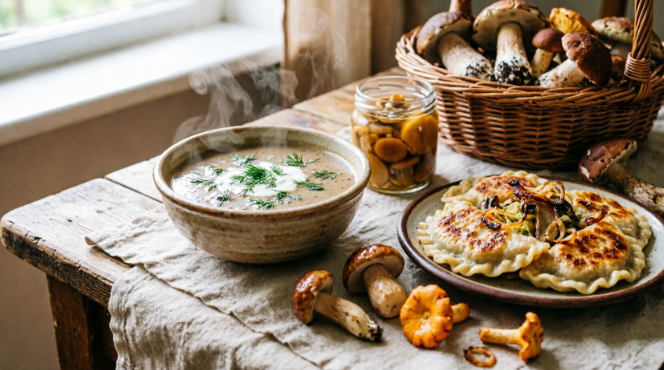
Polish cuisine, deeply rooted in culture and traditions, is renowned for its rich flavors and aromas. Among its numerous treasures, mushroom dishes hold a special place. Mushroom picking in Poland is not just a hobby; it’s a true national ritual, passed down from generation to generation, which has influenced the country’s culinary identity for centuries. Forest treasures such as porcini (borowiki), chanterelles (kurki), bay boletes (podgrzybki), and orange birch boletes (koźlarze) have always been the basis of many exquisite and hearty dishes.
📌 If you’d like to explore more about Poland’s culinary heritage and traditional beverages, check out our guide on the alcoholic face of Poland: from traditional infusions to modern mixology – it’s a great complement to your knowledge of Polish food culture.
Mushrooms in Polish cuisine are valued not only for their unique, umami flavor but also for their versatility. They can be the main ingredient of a dish, a rich addition, or even an aromatic seasoning. Their intense aroma can transform simple meals into true culinary masterpieces, reminiscent of Poland’s pristine forests and their abundance.
Most Popular Polish Mushroom Specialties
The variety of Polish mushroom dishes is impressive. From simple, rustic delights to sophisticated festive meals, mushrooms play a crucial role. Below, we present some of the most characteristic and beloved dishes by Poles, which are a source of pride for Polish gastronomy:
- Mushroom Soup (Zupa grzybowa): A classic of Polish cuisine, often served during Christmas, but also enjoyed throughout the year. Prepared with dried or fresh mushrooms, with the addition of cream, pasta, or potatoes. Its deep, forest aroma is unrivaled and represents the essence of Polish flavor.
- Pierogi with Cabbage and Mushrooms (Pierogi z kapustą i grzybami): One of the most recognizable Polish dishes. Delicate dough filled with a stuffing of sauerkraut and aromatic forest mushrooms, often served with fried onion cracklings. Perfect as a main course or a festive appetizer.
- Hunter’s Stew with Mushrooms (Bigos z grzybami): The king of Polish cuisine, a true “hunter’s dish.” Long-simmered sauerkraut with fresh cabbage, various types of meat (though vegetarian versions with just mushrooms are also popular), dried plums, and, of course, a generous amount of dried mushrooms, which give it an unparalleled taste and aroma.
- Mushroom Sauce (Sos grzybowy): A versatile accompaniment to meats, groats, potatoes, or dumplings. This thick, aromatic sauce based on fresh or dried mushrooms, often with added onion, garlic, and cream, is a true essence of Polish flavor, enriching many dishes.
- Marinated Mushrooms (Grzyby marynowane): Jars full of marinated mushrooms are a constant feature in Polish pantries. They are an excellent snack, an addition to salads, or an ingredient in appetizers, valued for their tart taste and firm texture.
- Mushroom Croquettes (Krokiety z grzybami): Fried pancake rolls filled with mushroom stuffing, often served with red borscht. This is a hearty and incredibly tasty alternative to pierogi, ideal for lunch or dinner.
📌 If you’re planning a culinary journey through Poland and want to discover more about evening entertainment after tasting traditional dishes, check out our guide to nightlife in Poland: where to feel the city vibe after sunset – you’ll find plenty of useful tips for your nights out.
Traditional Polish mushroom dishes are much more than just meals. They are a part of cultural heritage, a symbol of hospitality, and a reminder of the richness of Polish forests. Every bite of these dishes transports us into a world of nature and tradition, offering unforgettable culinary experiences for every connoisseur. The taste of the Polish forest, encapsulated in these dishes, is a true treasure that deserves to be celebrated and discovered by new gourmands.